Monday, 16 December 2013

Animation progress

 I have begun producing the animated clips for the video, using each block of audio I chopped up earlier as a base for each. The animations are in an editable .fla file, and an easy to view .swf for use with Final Cut later on.

The animation is largely done using tweens, which operate by filling in the motionless space between two frames, where the object in each is in a different position. An ease can be added to the tween to make it run more fluidly, instead of at a constant acceleration.

Tuesday, 10 December 2013

Backgrounds and Audio ready!

I have edited the backgrounds, ready for use in the film. They are a very large size however (around 3000x1200 px), but this shall be useful when I have to be closer to the backgrounds in the video.
I have also seperated the soundtrack into 22 chunks using Audacity, so I can animate over each, and then put them together in Final Cut. This will be a darnsite easier and much less resource consuming than doing the whole film in one big Flash file.

I shall begin animating very soon!

Monday, 2 December 2013

Background Progress: Last two!

This is the back wall of the laboratory. The blank space in the center is where Viva-1 shall be singing at the beginning of the film. 
This is the side wall of the laboratory. This will be shown when Viva-1 is committing his crime.

I shall now scan these, and spruce them up accordingly in Photoshop. 

Monday, 25 November 2013

Background progress: Three done

 This is the background that I was working on in the previous post. This is the first shot in the film, just without subdued tone, which will be added digitally. I am very pleased with this, as I've not drawn using perspective in years.
 This is the ceiling that will be shown when the lights flicker on inViva-1's room. This will only be in the film for a few seconds.
This may not look like anything useful, but it is. When Viva-1 is awakening, the world around him shall be blurry, as if he is disorientated. Therefore, this drawing shall be faded and shaded to look that way, so it needn't be overly detailed.

Monday, 18 November 2013

Backgrounds

I have began production of the backgrounds/still illustrations for the animation. Here's my progress on the first - the lab at the beginning!

Wednesday, 13 November 2013

Viva-1's first Flash appearence!

After chopping out all his components, I put Viva-1 together in Flash, just to see what he'd look like all together. He's a lot more hench then expected, but otherwise he's great! I'll try some little bits of animation done soon.
I was really not expecting Flash to handle .PSD files, but it turns out it does! It just turns the visible data into a vectored bitmap when it imports them, which makes them really lightweight and easy to manipulate. I'm not sure what it would do with a .PSD with several layers, however.

Tuesday, 12 November 2013

Model Sheet Slicing

I created a model sheet for my robot character, Viva-1, using physical means (pencil, pen, paper), and then scanned it. I then used Photoshop do remove the paper background, and therefore leave only Viva-1's components.

I tried to remove the strange pink tinge that the scanner decided to give the components, but after doing so, I decided that I'd like to keep it. It adds a feel of humanity and life to the otherwise metallic robot.
The next thing I did was cut out each individual component on the model sheet, so I can then maneuver them separately in Flash. I am yet to cut out the individual mouth shapes however.
All these components were stored on my USB Drive, although I shall move them so that they are local to my PC, just in case anything horrific happens.

Monday, 11 November 2013

Animatic


I have completed the Animatic version of my storyboard! This was done so that I could match up the timings of each 'scene' with the music track I have chosen.
 I shall now upload the animatic to my personal YouTube channel. However, I am marking the video as unlisted, so that it shall only be viewable to those who have a link to it, such as yourself. This'll ensure that not too much about the piece is given away early on.

Monday, 4 November 2013

Contacting the Musicians

Sadly, Coldplay have not provided a business E-Mail for contact on their website. They do however have a personal contact page, which is more suitable for Fanmail. However, seeing as I am not a business, I have used this service to contact them and enquire as to whether or not I can use their track.
I await a reply.

Monday, 21 October 2013

Magazine ad conventions

There are many ways which artists can release the news of their new album unto the world - television commercials, interviews, online adverts, radio releases, and so on. But there is one extra form of advertising which could likely be on the decline, as it's medium is slowly being taken over by digital resources. This medium, is the magazine.

Publications like NME and Mojo not only provide readers with interviews with musicians, or reviews and news if albums and concert. They also provide a unique platform of advertisement for new albums. 

Publishers can provide full page sized areas in which artists can advertise, or if needs be, smaller areas which may be half or even a quarter of a page - it really depends on what the artists are willing to pay. However, like most media, there are codes and conventions that magazine ads must abide to in order to be a success. 

Artist, Album name, Release company: This could be displayed using the artist's recognisable logo, or a modification of such. Also, the record label's name or logo should be shown - sometimes, logos of companies which may be selling the album, or sponsoring the ad, will also be shown. 
Imagery of the cover or music video: In advertising a product, it's important to have a cohesive theme running through the entirety of the campaign - the commercial, the music video, the album cover... All must match in some form or another.
Tagline: Something along the lines of "the new hit album..." or "the long waited release of..." really grabs the reader's attention, and generates increased interest - especially with fans of the artist advertised.
Tracks included: It's not uncommon to mention the headlining track in advertising material, but you may also want to mention other tracks on the album if the artist and/or their music are quite prolific.
Release date: Essential in allowing the reader to know when they'll be able to get the album. A simple 'coming soon' doesn't fare as well with music as it does with motion pictures.
Your dates: If the album in question is the one that the artists shall be performing on tour, the dates for said your will be shown on the ad. An advantage to doing this with a magazine ad, is that the dates are available in a tangible form, which can be accessed easily - or even removed from the magazine and stuck up as a poster. 

Digipak conventions

Digipaks come in various formats, that are chosen by the artist for their various purposes. They are as follows:

Four Panel
Four panel Digipaks are the most common form of Digipak utilized. This pak has two exterior panels, on interior panel which could be used for extra information or illustrations, and the CD tray on the fourth panel. It is the lightest variety of Digipak, therefore making it easier to ship.


Six Panel
Six Panel Digipaks boast both an extra internal and an extra external panel. What would be the front panel of a Four Panel Digipak is instead folded into the pak, therefore meaning that, when extended, the pak shows two interior panels, which can feature lots of information on things such as lyrical content, or a large illustration.


Eight Panel
An Eight Panel Digipak is essentially the same format as a Six Panel pak, but with an extra panel on the opposite. This means that, when first opened, the pak displays two panels, which could feature illustrations and information. The pak can then be folded out even further to reveal three internal panels and the disc tray. This format allows a larger amount of information to be included with the disc. However, it is the bulkiest form of Digipak out there, therefore making it harder to ship.


Conventions

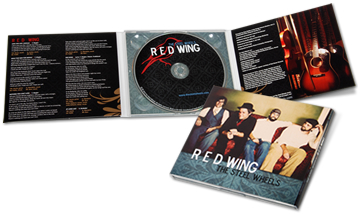
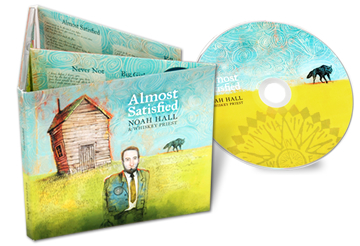
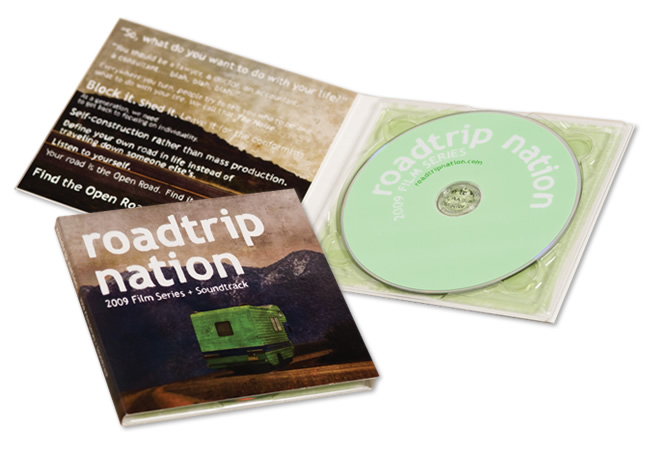
To analyse the conventions of Digipaks, I looked at two digipaks that I had obtained access to, and looked over photographs of them:
 This Fleet Foxes album is encased within a Four Panel pak. This front face features a very intricate painting, with lots of activity going on in it. The amount of different things happening in this scene makes the piece extremely fascinating, therefore beckoning you to delve deeper into the picture.
 The inside panels of the Digipak possess an elegant, repeating pattern, which also is continued on the disc itself, though sans colour. This pattern is in keeping with the era portrayed in the painting - medieval. However, this means that the Digipak possesses no information about the band or the songs on the disc, adding mystery.
 The rear face of the packaging has a small continuation to the illustration, showing yet some more action occurring in the scene. However, a majority of the space here s taken up by the titles to the songs inside, printed in large text. At the bottom, information concerning publishers, the product code and the band's MySpace is shown. The barcode has been applied by the seller of this particular Digipak, showing that it originally didn't have one printed on. This could imply that Fleet Foxes largely sell their albums through the internet, and not in stores.
 The spine of the Fleet Foxes Digipak has some more of the cover illustration seeping through it, meaning that when the pak is fully extended, the front, spine and back form the full image. The spine also shows the name of the band, and the product code for the product.
This Spiers&Boden digipak is unlike the Fleet Foxes, as it is a six panelled design, as opposed to a four-panelled design.
The first two internal panels feature information on the individual songs, and what they are about. The third internal panel houses the disc.


The three external panels feature exterior photographs of the band in what is assumed to be their creative environment. The photos appear to have a slight sepia overlay, conveying a warm, rustic mood.

The front cover panel features the band name and the album name, 'Songs'.
The base panel (back cover) features the names of the songs on the CD, the postal address and web address for the band, the logo of the publisher, and a barcode. The spin contains the band's name, serial number and album name also.

What is a Digipak?

Digipaks (Or as they're sometimes stylized, Digi-paks) are a type of CD case. The Digipak consists of a card or cardboard slip, containing an attached plastic tray for the disk (or sometimes just a card pocket) and sometimes a pamphlet on the band.

Jewel cases are clear, plastic CD cases. Jewel cases are have an inbuilt tray for the disk, and a pamphlet/cover slip that slides into the front lid of the case to form the cover.


Digipak pros and cons

Pros
  •  Digipaks don't shatter like Jewel cases, giving them more longevity.
  • They are much cheaper to produce, therefore meaning they are easier to mass-produce.
  • They have a much more professional, yet home-brewed aesthetic.
  • There is a lot more that can be done in terms of design with a Jewel case, meaning that they can link in with a band's promotional package consistently.
  • They are much lighter, and therefore easier to ship.
  • They have an air of nostalgia towards old Vinyl cover slips.
Cons
  • They are more likely to retain damage through general wear and tear - they can rot if moist.
  • The disk tray is likely rather cheaply produced, and can be brittle.
  • They can deform or tear, and this makes them irreplaceable.
  • Sometimes, it can be harder to remove the disk.
Digipaks are preferred as of late, due to the increasing need to be environmentally friendly, as digipak producers advertise. Digipaks also possess a much more professional aesthetic than Jewel Cases, due to the much more personal and crafty production method behind them. However, certain, more popular Genres such as Pop, Metal and Classical, favor jewel cases.


Tuesday, 17 September 2013

Treatment

Mise en Scene
  • The environment of the video will be that of a science laboratory. However, there will be two conditions of the lab - one in ruin, and one fixed up - according the the narrative being displayed (present and past respectively). It will be illustrated using pencil and biro pen, and will largely remain still - in the past version, this will be to highlight the clinical nature of the lab, but in the present version, this will be to emphasise how it has been abandoned, and that it is inactive.
  • The main character is a machine, so therefore will not be wearing any clothing. However, laboratory staff that may be present in the past narrative will be wearing white medical coats, over white shirts and black or grey ties, or grey or black dress shirts for any female staff.
  • The props in the scene will consist of various mechanical tools, such as drills and wrenches. There will also be mounted equipment, such as mechanical arms suspended from the ceiling, and computer equipment also. In the past narrative, this machinery will be white and clean, whereas in the present narrative, what's left of it will be rusted, faded and broken.
  • The main robot character will be unable to maneuver himself around the scene during his singing sequences. However, he will be able to move his head, upper torso and one remaining hand, for expression's sake.
  • The past narrative will be illustrated in a still fashion, with the drawings scrolling across the screen and inter-fading gently, to match the pace of the song. Some little bits of animation may be present, such as close-ups of repairs or fixings being made to the robot character, or the scientists interacting with him.
  • The past narrative's lab will be illustrated to appear bright and clinical. The present narrative however will be drawn to appear lit by one, dim light in the ceiling, which will flicker on at the beginning of the video. This light will possibly be slightly beige in colour, to make the abandoned lab seem slightly sickly.
  • The video will be largely black and white, due to the illustration style I am opting for. However, small pin-point details may be coloured, such as scientist's ties, lights on the equipment and robot, and maybe a female scientist's lipstick. Blood may be present in the video, which will be coloured red.
Camera angles
  • The singing sequences with the robot will be framed at eye level with the machine, and will be facing straight towards him. The shot will be wide however, to highlight the desolate loneliness of the machine, and to display how damaged his environment is.
  • Animated close-ups will be used in the otherwise stationary flashback sequences to show parts of the robot being installed, repaired or tweaked, giving an intimate glimpse into his early beginnings.
  • The still illustrations in the flashback sequences will slowly slide along the screen or zoom in with an eased tween, to allow for some motion, and maybe to draw attention to particular details in the illustrations.
  • When the robot is acting dangerously, or things are going wrong, the robot will be viewed at a low angle, to make him seem imposing.
Editing
  • The singing sequences will use long, drawn out shots, which slowly zoom in towards the robot. This lingering will highlight how the robot himself has also lingered in this space for so long.
  • The flashbacks will have a slow editing pace between illustrations, to allow the viewer time to take them in, and also to match the pace of the song. As the pace builds up however, the pace will build up, as the still illustrations are cut away to show the small, animated segments showing the robot's construction and repair.
  • The editing pace will slow right down after the robot has commit his crime, before fading back to the present narrative to show the robot in his current state again.
  • Still illustrations will slowly wipe or zoom across the screen, in the direction of a point of interest. They will also fade gently into eachother.
Animation
  • The animation will be made using Macromedia Flash 8, using eased tweens and tweened fades.
  • The characters and props that will move in the product will have their puppet components illustrated using physical means (pencil, biro, ink pen) to give a grimey look.
  • Backgrounds will be largely pencil sketched, with some photo-manipulation using Photoshop CS5 to add some extra depth or shade that is otherwise difficult to produce physically.
  • Still illustrations in the flashback sequence will be performed using the same method as the background illustrations, but will be treated softer, to make these scenes more 'angellic' and bright.
  • The art style will be simplistic, but with enough anatomical accuracy to remain legible.
Performance
  • During singing sequences, the robot will be largely immobile, only being able to move his upper body, head, and remaining hand. During the flashbacks however, he will be illustrated in a way which shows that he was fully able to function and perform tasks.
  • The scientists in the flashbacks will be illustrated to be calm and collected, but will be shown to be rushy and panicky when things go wrong however.
  • The robot will have a small monitor where his lower jaw will be, which will have an animated (possible rotoscoped) mouth upon it. This will lip-sync with the lyrical content of the song.
Representation of artists and other groups
  • References to Coldplay's previous works will be shown throughout the piece as easter eggs for keen fans watching the piece, but also to keep ties with the source material of the song.
  • The scientists will be illustrated as a mix of age ranges. Some will be young university students, while others will be adults, and maybe even elderly.
  • The piece has a large overriding moral of the ethics of science. As this machine is built to be intelligent, but is angered, and due to his rage abandoned, it asks the audience the question of whether or not it is ethical to 'play god', and create new life? Also, as the machine is reciting the lyrics to the song, where he is apologising for all he has done wrong, it shows that if we were to create a being with emotions, to abandon and abuse it would be just as devastating for it as it would be for us if we were in it's shoes.
Intertextuality
  • References to Coldplay and their previous works will be hidden in the background and flashback artworks as easter eggs for keen fans, and also to keep ties with Coldplay themselves.
  • The machine's 'mouth monitor' is somewhat inspired by the design of the face of the gardner robot in Steven Spielberg's AI: Artificial intelligence, and also the main character in the music video to Gotye's song Life's a Mess.
Link between visuals and lyric
  • The song portrays the author's apologetic view on his partner leaving him, and his wish to 'go back to the start' and fix the severs he created. As the machine is reciting his lyrics, the context has changed, as he is apologising to the scientists who have abandoned him, and who he harmed.
  • The title 'The Scientist', and also the verse referring to science and mathematics, both reference to both the machine himself (a creation of science) and the environment he is in (a lab).
Voyeurism
  • During the singing sequences, the robot character will be focusing on us, the audience, with his eyes/cameras, making it seem like we are the scientists whom he is apologising to.7
Where the video will be shown
  • This video will most likely be published to my personal YouTube channel, but I will also make a Vimeo channel to post it too also, as Vimeo is a more artistic website, and would appreciate the video more.
Target audience
  • The main audience of the piece will be persons who listen to music of a similar kind to Coldplay, who seem to be interested in artistic content such as animation or film which has meaning to it.
  • The film will not be suitable for children, as it will likely display blood.

Monday, 16 September 2013

Inspirational Moodboard

Screenshots from the following music videos:
  • The Shins - The Rifle's Spiral
  • Gotye - Life's a Mess
  • Portishead - The Rip
  • Tool - Sober

And also David Firth's cartoon 'A Black and White cartoon about Roof Tiling'