Monday, 21 October 2013

Magazine ad conventions

There are many ways which artists can release the news of their new album unto the world - television commercials, interviews, online adverts, radio releases, and so on. But there is one extra form of advertising which could likely be on the decline, as it's medium is slowly being taken over by digital resources. This medium, is the magazine.

Publications like NME and Mojo not only provide readers with interviews with musicians, or reviews and news if albums and concert. They also provide a unique platform of advertisement for new albums. 

Publishers can provide full page sized areas in which artists can advertise, or if needs be, smaller areas which may be half or even a quarter of a page - it really depends on what the artists are willing to pay. However, like most media, there are codes and conventions that magazine ads must abide to in order to be a success. 

Artist, Album name, Release company: This could be displayed using the artist's recognisable logo, or a modification of such. Also, the record label's name or logo should be shown - sometimes, logos of companies which may be selling the album, or sponsoring the ad, will also be shown. 
Imagery of the cover or music video: In advertising a product, it's important to have a cohesive theme running through the entirety of the campaign - the commercial, the music video, the album cover... All must match in some form or another.
Tagline: Something along the lines of "the new hit album..." or "the long waited release of..." really grabs the reader's attention, and generates increased interest - especially with fans of the artist advertised.
Tracks included: It's not uncommon to mention the headlining track in advertising material, but you may also want to mention other tracks on the album if the artist and/or their music are quite prolific.
Release date: Essential in allowing the reader to know when they'll be able to get the album. A simple 'coming soon' doesn't fare as well with music as it does with motion pictures.
Your dates: If the album in question is the one that the artists shall be performing on tour, the dates for said your will be shown on the ad. An advantage to doing this with a magazine ad, is that the dates are available in a tangible form, which can be accessed easily - or even removed from the magazine and stuck up as a poster. 

Digipak conventions

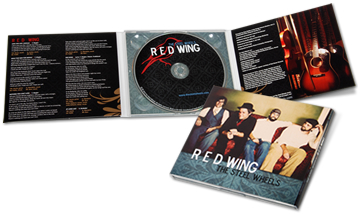
Digipaks come in various formats, that are chosen by the artist for their various purposes. They are as follows:

Four Panel
Four panel Digipaks are the most common form of Digipak utilized. This pak has two exterior panels, on interior panel which could be used for extra information or illustrations, and the CD tray on the fourth panel. It is the lightest variety of Digipak, therefore making it easier to ship.


Six Panel
Six Panel Digipaks boast both an extra internal and an extra external panel. What would be the front panel of a Four Panel Digipak is instead folded into the pak, therefore meaning that, when extended, the pak shows two interior panels, which can feature lots of information on things such as lyrical content, or a large illustration.


Eight Panel
An Eight Panel Digipak is essentially the same format as a Six Panel pak, but with an extra panel on the opposite. This means that, when first opened, the pak displays two panels, which could feature illustrations and information. The pak can then be folded out even further to reveal three internal panels and the disc tray. This format allows a larger amount of information to be included with the disc. However, it is the bulkiest form of Digipak out there, therefore making it harder to ship.


Conventions

To analyse the conventions of Digipaks, I looked at two digipaks that I had obtained access to, and looked over photographs of them:
 This Fleet Foxes album is encased within a Four Panel pak. This front face features a very intricate painting, with lots of activity going on in it. The amount of different things happening in this scene makes the piece extremely fascinating, therefore beckoning you to delve deeper into the picture.
 The inside panels of the Digipak possess an elegant, repeating pattern, which also is continued on the disc itself, though sans colour. This pattern is in keeping with the era portrayed in the painting - medieval. However, this means that the Digipak possesses no information about the band or the songs on the disc, adding mystery.
 The rear face of the packaging has a small continuation to the illustration, showing yet some more action occurring in the scene. However, a majority of the space here s taken up by the titles to the songs inside, printed in large text. At the bottom, information concerning publishers, the product code and the band's MySpace is shown. The barcode has been applied by the seller of this particular Digipak, showing that it originally didn't have one printed on. This could imply that Fleet Foxes largely sell their albums through the internet, and not in stores.
 The spine of the Fleet Foxes Digipak has some more of the cover illustration seeping through it, meaning that when the pak is fully extended, the front, spine and back form the full image. The spine also shows the name of the band, and the product code for the product.
This Spiers&Boden digipak is unlike the Fleet Foxes, as it is a six panelled design, as opposed to a four-panelled design.
The first two internal panels feature information on the individual songs, and what they are about. The third internal panel houses the disc.


The three external panels feature exterior photographs of the band in what is assumed to be their creative environment. The photos appear to have a slight sepia overlay, conveying a warm, rustic mood.

The front cover panel features the band name and the album name, 'Songs'.
The base panel (back cover) features the names of the songs on the CD, the postal address and web address for the band, the logo of the publisher, and a barcode. The spin contains the band's name, serial number and album name also.

What is a Digipak?

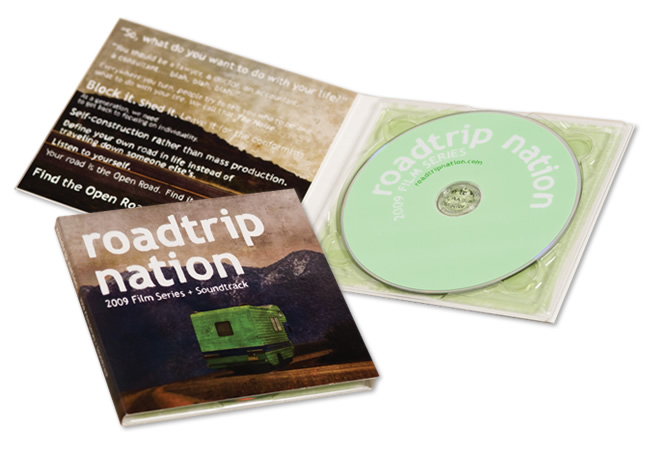
Digipaks (Or as they're sometimes stylized, Digi-paks) are a type of CD case. The Digipak consists of a card or cardboard slip, containing an attached plastic tray for the disk (or sometimes just a card pocket) and sometimes a pamphlet on the band.

Jewel cases are clear, plastic CD cases. Jewel cases are have an inbuilt tray for the disk, and a pamphlet/cover slip that slides into the front lid of the case to form the cover.


Digipak pros and cons

Pros
  •  Digipaks don't shatter like Jewel cases, giving them more longevity.
  • They are much cheaper to produce, therefore meaning they are easier to mass-produce.
  • They have a much more professional, yet home-brewed aesthetic.
  • There is a lot more that can be done in terms of design with a Jewel case, meaning that they can link in with a band's promotional package consistently.
  • They are much lighter, and therefore easier to ship.
  • They have an air of nostalgia towards old Vinyl cover slips.
Cons
  • They are more likely to retain damage through general wear and tear - they can rot if moist.
  • The disk tray is likely rather cheaply produced, and can be brittle.
  • They can deform or tear, and this makes them irreplaceable.
  • Sometimes, it can be harder to remove the disk.
Digipaks are preferred as of late, due to the increasing need to be environmentally friendly, as digipak producers advertise. Digipaks also possess a much more professional aesthetic than Jewel Cases, due to the much more personal and crafty production method behind them. However, certain, more popular Genres such as Pop, Metal and Classical, favor jewel cases.